What data does your car collect about you?
- WeThePurple
- Protect
- 5 min read
Location, braking, acceleration - and your phone's contacts and messages once you pair it. Mozilla reviewed 25 car brands and all 25 failed its privacy standards. What leaves the vehicle, where it goes, and the settings that actually change something.
You can refuse a loyalty card, decline cookies and lock down your phone. Then you get into a car that has been quietly recording where you went, how hard you braked and who is in your contacts, and there is no banner asking your permission, because you agreed when you bought it.
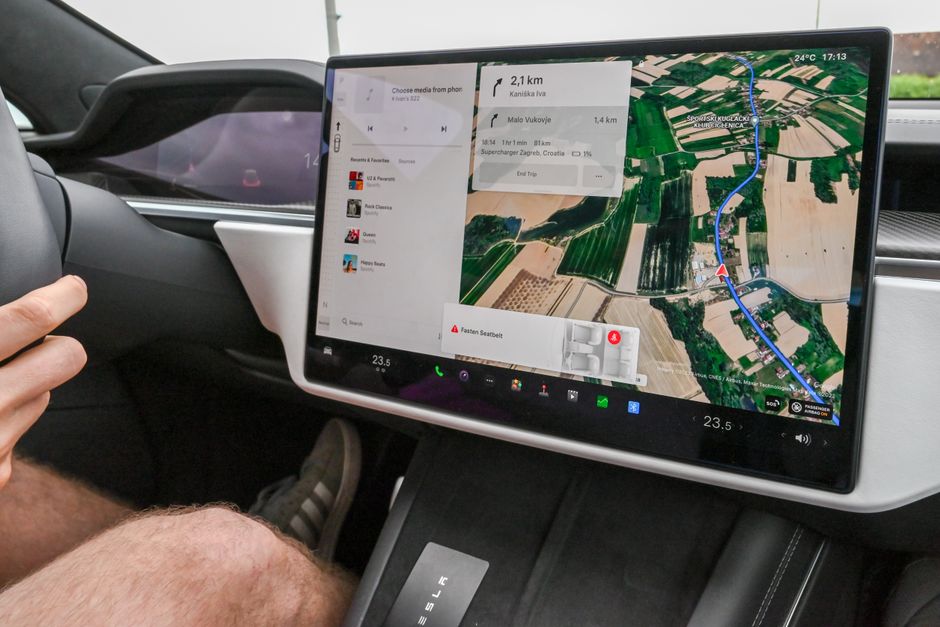
A modern vehicle is a connected device with a cellular modem, a satellite receiver and a dozen sensors, and it reports back to the manufacturer over a link you never see. That link exists for reasons that are genuinely good, emergency calls after a crash, stolen-vehicle recovery, over-the-air updates. The question is what else travels on it.
What is actually collected is broader than most drivers assume. Location, continuously, along with the routes you take and where you stop. Driving behaviour: speed, acceleration, hard braking, how often you exceed limits. Vehicle telemetry: mileage, battery or fuel state, tyre pressure, error codes. And whatever your phone hands over when you pair it, which on most infotainment systems means your contacts, call history and text messages, copied onto the car, not merely displayed by it.
The scale of the problem was made concrete in 2023, when Mozilla's *Privacy Not Included researchers reviewed 25 car brands against their privacy standards. Every one of the 25 failed. It remains the worst result the project has recorded for any product category it has examined.
Then it stopped being theoretical. Reporting in 2024 revealed that driving-behaviour data, braking, acceleration, trip-by-trip detail, had flowed from carmakers to data brokers and on to insurers, where it fed into the risk scores used to set premiums. Drivers had been enrolled through features marketed as safe-driving coaching, and many had no idea their data left the vehicle at all. Programmes were suspended, investigations and lawsuits followed, and the practice put a name on what had been abstract: your driving is a product with a market.
Selling or returning the car does not clear the record. A paired phone leaves its contacts and message history in the infotainment system, and rental fleets and used cars routinely change hands with the previous driver's data still on board. It is the digital equivalent of leaving your address book in the glovebox, except the next driver does not have to open anything to find it.
So what can you actually do? Less than you would like, and more than nothing. Every carmaker now runs a privacy portal where you can request deletion and, in some regions, opt out of data sharing, residents of California and other states with privacy statutes have enforceable rights here, and using them is the single most effective step. Inside the vehicle, the infotainment settings usually hide a data-sharing toggle under a name like *connected services* or *data collection*.
The trade-off is real and worth stating plainly: switching off connectivity can also disable automatic crash notification and stolen-vehicle tracking. Those are not marketing features. Decide deliberately rather than reflexively, and if you keep them, at least know what else rides along.
The habits that cost nothing are worth more than they sound. Delete your phone pairing before you hand back a rental or sell the car, and do it from the car's menu rather than just unpairing on the phone. Think twice before granting the infotainment access to contacts and messages at all, most of what people want from pairing is audio, and audio does not need your address book.
None of this makes cars uniquely villainous. It makes them the clearest example of a device you own that reports on you continuously, sold on features rather than on terms, and where the settings that matter are two menus deep, if they are there at all.